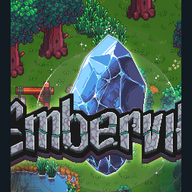
The Ultimate Emberville Beginner Guide: Mastering Your First Steps in the World of Gaming
Ready to start your journey? Our comprehensive Emberville beginner guide provides the essential tips, strategies, and mechanics you need to succeed.
Welcome to the World of Emberville
Stepping into a new gaming landscape can often feel overwhelming, but mastering the fundamentals is the surest way to guarantee long-term success. Whether you are a veteran of immersive sims or a newcomer testing the waters, this Emberville beginner guide is designed to streamline your early experience. By following the core principles outlined in this Emberville beginner guide, you can avoid common pitfalls and optimize your character’s progression from the very first hour.
Understanding how to manage your resources and navigate the environment is crucial for any player looking to climb the ranks. In this guide, we break down everything you need to know to hit the ground running.
Understanding Core Mechanics and Progression
The foundation of any successful run lies in how you interact with the game’s primary systems. Many players find that early-game hesitation leads to missed opportunities for growth. To maximize your efficiency, consider the following breakdown of essential progression pillars.
Key Progression Pillars for Beginners
Community reports suggest that players who focus on early power-scaling often have a much smoother experience during mid-game encounters. It is important to remember that while the game offers a vast array of choices, sticking to a specific build path during your first playthrough will save you time and in-game currency.
Strategic Resource Management
Success in this environment is rarely about raw skill alone; it is about how you manage your inventory and your surroundings. If you are struggling with scarcity, you are likely overlooking the most efficient gathering routes.
Essential Early-Game Resource Table
As highlighted in various gaming industry insights, the most successful players are those who treat their inventory as a tactical tool. Do not hoard items that provide negligible bonuses. Instead, sell or dismantle them to reinvest in gear that provides substantial stat boosts.
Navigating the Environment: Tips from the Community
Player experience indicates that many newcomers lose significant time by ignoring the map’s verticality. Just like in other popular survival and exploration games, the best loot is often tucked away in hard-to-reach areas.
Exploration Best Practices
- Look Up: Many hidden caches are located on ledges or rooftops that are not immediately obvious.
- Listen for Audio Cues: The game uses spatial audio to indicate nearby loot or threats.
- Follow the Light: Environmental lighting often guides players toward the critical path.
- Establish a Base: Choose a central location with access to water and crafting stations early on.
If you find yourself stuck, remember that backtracking is often a mechanic, not a failure. Sometimes, the path forward requires a piece of equipment you haven't unlocked yet. Don't be afraid to leave an area and return once your character is better equipped.
Optimizing Your Build Path
One of the most common questions from the community involves how to spend early skill points. While it is tempting to go for flashy combat abilities, veteran players often recommend investing in "Quality of Life" skills first.
Recommended Skill Priority
- Inventory Expansion: Increases your carrying capacity, allowing for longer expeditions.
- Stamina Regeneration: Essential for both combat maneuvers and faster traversal.
- Gathering Speed: Reduces the time spent on repetitive tasks.
- Damage Resistance: Provides a buffer for those inevitable mistakes during exploration.
By prioritizing these, you essentially build a "safety net" that allows you to experiment with more aggressive combat styles later in the game without the constant fear of being underpowered.
Comparing Your Playstyle
Not everyone plays the same way, and the game rewards various approaches. Whether you prefer a stealthy, methodical pace or a fast-paced, aggressive style, your build should reflect that intent.
Playstyle Strategy Comparison
Community reports highlight that players who hybridize these styles—for example, using stealth to reach a position before switching to aggressive tactics—often find the most success in high-difficulty zones.
Frequently Asked Questions (FAQ)
Is this Emberville beginner guide applicable to all platforms?
Yes, the core mechanics and strategies discussed in this Emberville beginner guide apply across all platforms, ensuring you have a consistent experience regardless of where you play.
Should I focus on the main campaign or side quests first?
While the main campaign moves the story forward, completing side quests early is vital. They often provide unique gear and XP boosts that make the main campaign significantly easier.
How do I know when I am ready for higher-level areas?
Check your gear level against the recommended level for the zone. If you are consistently dying in two or three hits, it is a clear sign you need to upgrade your armor or invest in defensive skills before proceeding.
Can I reset my skill points if I make a mistake?
Yes, the game allows for a respec of your skill points at designated hubs. However, this feature usually comes with an in-game currency cost, so try to plan your build carefully.
Related Guides
Emberville Gameplay Guide: Everything You Need to Know About the Upcoming Early Access Adventure
Get ready to master Emberville gameplay with our in-depth guide covering combat, base building, and character progression in this upcoming RPG.
Emberville PC Gameplay: Everything You Need to Know Before the October Launch
Get ready for the release of Emberville. Discover what to expect from the upcoming PC gameplay, combat systems, and town-rebuilding mechanics.
Everything You Need to Know: The Ultimate Emberville Wiki Guide for Beginners
Prepare for your journey into the Vitromotus. This Emberville wiki guide covers everything from combat classes to base building and character progression.
The Ultimate Emberville Guide: Mastering Your Gameplay and Strategy in 2026
Looking for a comprehensive Emberville guide? Discover essential strategies, expert tips, and community-proven techniques to dominate your next session.